A Solar Power Conditioning Unit (Solar PCU) is a device that converts direct current (DC) electricity into alternating current (AC) electricity while managing battery charging and power supply from solar panels, batteries, and the utility grid. Depending on its settings, it can prioritize solar electricity and switch between available power sources.
Solar PCUs are particularly useful for installations that require battery backup and greater control over electricity usage. They are generally more suitable for larger or more complex battery-backed solar projects than for standard residential rooftop installations.
This guide explains the solar PCU full form, working principle, components, types, specifications, battery and panel requirements, sizing, price, and suitability in 2026.
What Is a Solar PCU?
A Solar PCU is an integrated power management device used in solar installations that require battery charging, backup power, and control over different electricity sources. Its main advantage is that these functions can be managed within a single unit rather than through separate devices.
Depending on its operating mode, a Solar PCU can perform the following functions:
- Converts DC electricity into AC: It converts electricity from the solar panels or battery into AC power for connected loads.
- Controls battery charging: Its built-in charge controller regulates charging from solar energy and, where supported, grid electricity.
- Manages available energy sources: It determines when the system should use solar, battery, or grid power according to the selected priority settings.
- Monitors and protects the system: It tracks operating conditions and provides protection against overload, short circuits, abnormal voltage, and battery-limit violations.
Some advanced PCUs support time-based operating schedules. This can be useful where Time-of-Day (ToD) tariffs apply because the system may be programmed to charge or discharge the battery during selected tariff periods. Currently, ToD is live for the residential segment in Maharashtra and Kerala.
How Does a Solar PCU Work?
A solar PCU manages solar generation, battery storage, household or commercial loads, and grid power in accordance with its selected operating mode.
The basic process works as follows:
- Solar panels generate DC electricity: Solar radiation falling on the PV modules produces direct current electricity.
- The charge controller manages solar input: The built-in MPPT (maximum power point tracking) solar charge controller regulates the incoming PV (photovoltaic) voltage and current.
- The PCU follows the selected priority mode: The control system determines how available solar power should be allocated between battery charging and connected loads.
- DC electricity is converted to AC: The inverter stage converts DC electricity to AC for the loads.
- Available surplus can charge the battery: When the operating mode and available generation permit it, solar electricity is stored in the battery.
- The battery supports loads when required: As solar generation declines, stored electricity can be used to meet the shortfall.
- Grid electricity can provide additional support: Depending on the PCU configuration, grid electricity can run loads, charge the battery, or both.
The actual flow does not have to remain the same throughout the day. A solar PCU can adjust how it uses each source based on solar generation, battery state of charge, selected priority settings, and, in compatible systems, ToD tariffs.
Let’s understand this through a practical operating schedule.
- 6 AM to 9 AM (sunrise and rising solar generation): The PCU can route available solar electricity towards battery charging while the loads continue to use grid electricity, depending on the selected mode and tariff.
- 9 AM to 4 PM (peak solar hours): Solar generation is high, and the battery reaches full charge. The PCU can directly supply solar electricity to the loads, avoiding grid consumption and battery discharge.
- 4 PM to 7 PM (declining solar generation): The PCU can supplement the remaining solar generation with battery or grid power, according to the applicable ToD tariff and programmed settings.
- 7 PM to 6 AM (nighttime when solar generation is unavailable): Loads can run from battery or grid electricity. Once the battery reaches its lower voltage or state-of-charge threshold, the solar PCU can switch to grid power and, where programmed, use the grid for charging based on the ToD tariff.
This is an illustrative operating pattern. Actual switching times depend on sunlight, consumption, battery state, the PCU’s programming, and the tariff structure available through your DISCOM (distribution company).
What Does Solar Priority Mean in a PCU?
Solar priority means that the PCU is configured to use available solar electricity before drawing power from the grid, wherever system conditions allow.
Solar electricity may first serve the running loads and then charge the battery. If solar generation is insufficient, the PCU can use battery or grid electricity according to the selected operating mode.
Can a Solar PCU Work Without a Battery?
Yes, some modern solar PCUs with a hybrid inverter architecture can operate without a battery. Some hybrid solar inverters are, in fact, a type of solar PCU and can manage solar and grid power even when storage is not installed.
However, traditional battery-oriented PCUs are designed around an attached battery bank. Without battery storage, you also lose the stored energy backup that would otherwise be available after solar generation stops.
Always check whether the particular PCU supports battery-less operation rather than assuming that every model does.
What Are the Main Components of a Solar PCU?
A solar PCU combines several electrical and control functions inside one power management system.
Its main components include:
- DC-to-AC inverter: Converts DC electricity into AC electricity for connected loads.
- MPPT charge controller: Controls solar input while tracking the operating point that produces useful power from the solar array.
- Grid or mains charger: Allows battery charging via grid electricity where available.
- Control logic or DSP (Digital Signal Processor): Decides how solar, battery, grid, and loads interact according to operating settings.
- Automatic transfer or bypass system: Switches the load between available power sources as required.
- Display and monitoring system: Shows generation, load, battery status, voltage, faults, and other operating information.
- Protection circuitry: Protects against abnormal electrical conditions such as overload, short circuit, excessive voltage, and battery limits.
- Enclosure and mounting arrangement: Protects and supports the internal electronics and allows the unit to be installed safely in its intended environment.
What Are the Types of Solar PCUs?
Solar PCUs are mainly classified as MPPT (Maximum Power Point Tracking) or PWM (Pulse Width Modulation) based on their built-in charge-controller technology. MPPT units adjust the solar array’s operating point to improve energy capture, while PWM units operate closer to battery voltage and are now largely obsolete in modern rooftop solar designs.
MPPT vs PWM Solar PCU
MPPT can produce ~5% to 10% higher overall energy yield than PWM, with instantaneous gains of ~10% to 12% under some operating conditions. The actual gain depends on panel voltage, battery voltage, sunlight, temperature, and system design.
Here’s a side-by-side comparison of both:
| Factor | MPPT Solar PCU | PWM Solar PCU |
| Full form | Maximum Power Point Tracking | Pulse Width Modulation |
| Working | Tracks the PV array’s useful operating point | Pulls panel operating voltage closer to battery voltage |
| Solar utilization | Higher | Lower |
| Energy yield | ~5% to 10% higher overall than PWM | Lower compared with MPPT |
| Technology | Modern standard | Older and obsolete |
Solar PCU vs Solar Inverter: What’s the Difference?
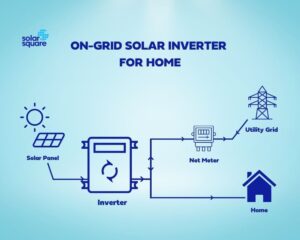
A solar inverter is a broad category of devices whose core job is to convert DC electricity from solar panels into usable AC electricity. A solar PCU, on the other hand, is a more integrated, battery-oriented solar power management system that combines inverter functions with solar charging and source management logic.
Most importantly, a solar PCU is designed to prioritize solar electricity and actively manage when the system uses solar, battery, or grid power. The distinction, however, has become less rigid with modern hybrid solar inverters. Advanced hybrid inverters can also manage solar, batteries, grid electricity, and multiple source-priority modes.
In common Indian residential usage, every solar PCU includes inverter functionality, but not every solar inverter is a solar PCU.
Here is how the two differ in practical use:
| Factor | Solar Inverter | Solar PCU |
| Main job | Converts solar DC into AC | Converts DC into AC and manages solar, battery, and grid power |
| Battery required? |
| Traditionally designed for battery-based systems |
| Solar priority logic | Depends on inverter type and model. An on-grid inverter does not need to choose between solar, battery, and grid in the same way. | Usually designed to prioritize solar power first, reducing grid use whenever sufficient solar energy is available. |
| Grid interaction | Depends on whether it is on-grid, off-grid, or hybrid | Typically manages the grid along with solar and battery |
| Backup during outage | Only in battery-based PV systems | Yes, when batteries are connected and configured |
What Specifications Should You Check in a Solar PCU?
A solar PCU’s capacity number alone cannot tell you whether it is compatible with your solar array, battery bank, or electrical load.
Check these specifications before selecting a unit:
- Rated PV capacity in Wp (watt-peak) or kWp (kilowatt-peak): It indicates the supported solar array capacity.
- Rated output power in W/kW: It shows the real power available for loads.
- Battery-bank voltage: It determines the battery voltage architecture required.
- MPPT voltage range: This shows the PV voltage window within which MPPT can operate.
- Maximum PV Voc (Open-Circuit Voltage): It sets the maximum permitted open-circuit voltage of the solar string.
- Solar charging current: It indicates how much charging current can be supplied by solar.
- Grid charging current: This shows the supported battery charging current from the grid.
- Efficiency: It indicates how efficiently the solar PCU converts and manages electricity.
- Output phase: This determines whether the PCU is single-phase or three-phase.
- Surge protection capacity: It shows the short-duration load it can support when motors or compressors start.
- Monitoring: This may include display, Wi-Fi, GSM (Global System for Mobile Communications), app, or remote system monitoring.
How Many Solar Panels Can You Connect to a Solar PCU?
The maximum number of panels that can be connected to a Solar PCU depends on its permitted PV input power, MPPT voltage range, maximum open-circuit voltage, and input-current limits. The number of panels required to meet your electricity needs is a separate calculation based on daily consumption and available sunlight.
For calculation purposes, let’s consider a 10 kVA (kilovolt-ampere) solar PCU with the following assumptions:
- Daily electricity requirement: 30 kWh or 30,000 Wh
- Overall usable system yield after losses: 75%
- Peak sun hours: 5 hours per day
- Solar panel rating: 600 W
- Long-term panel degradation factor: 90% over 15-20 years
First, account for system losses and long-term panel output.
- Required solar generation = Daily electricity requirement ÷ (system yield × degradation factor).
- 30,000 Wh ÷ (0.75 × 0.90) ≈ 44,444 Wh/day
Now, calculate the required array capacity: 44,444 Wh ÷ 5 peak sun hours ≈ 8,889 W.
So, the required solar array is ~8.9 kW.
Using 600 W solar panels: 8,889 W ÷ 600 W ≈ 14.8
You would therefore need approximately 15 × 600 W solar panels for this example.
How Many Batteries Does a Solar PCU Need?
The number of batteries required for a solar PCU depends on its required battery bank voltage, battery capacity, chemistry, connected load, and the backup duration you need.
Consider a 10 kVA solar PCU using two compatible 51.2V, 100Ah lithium batteries. When connected in parallel, they form a 51.2V, 200Ah battery bank with a nominal storage capacity of 10.24kWh.
Battery count alone, however, does not determine backup duration. The calculation must also account for usable depth of discharge, system efficiency, and the connected load.
Using an 85% usable depth of discharge and 90% round-trip efficiency, you can calculate backup time using the formula listed below:
| Backup time = (Battery voltage × total Ah × usable DoD × round-trip efficiency) ÷ connected load |
Based on these values, the usable AC energy is, 10,240Wh × 0.85 × 0.90 = 7,833.6Wh.
This provides the following illustrative backup:
| Connected Load | Approximate Backup Time* |
| 3,000 W | ~2.61 hours |
| 5,000 W | ~1.57 hours |
| 10,000 W | ~0.78 hours |
*DISCLAIMER: These are illustrative calculations, not guaranteed backup times. The 10,000W example assumes that the lithium battery cells support a continuous discharge rate of at least 1C. The batteries and their Battery Management Systems (BMS) must also collectively support the PCU’s required DC input current after accounting for inverter losses. Battery age, BMS limits, initial state of charge, temperature, actual appliance consumption, and system configuration can affect the available output and backup time.
What Size Solar PCU Do You Need for Your Home?
The appropriate Solar PCU capacity depends on the maximum simultaneous load, starting surge, required backup duration, battery-bank design, and solar array capacity. The selected PCU must satisfy all these requirements rather than simply matching the kVA rating to the panel capacity.
Follow these steps:
- List the appliances that may operate simultaneously.
- Check their actual running wattage.
- Add the simultaneous running loads.
- Identify appliances with compressors or motors such as ACs, refrigerators, and pumps.
- Check their starting or surge requirements.
- Choose a PCU whose rated real-power output supports the continuous load.
- Verify that its documented surge capability supports the expected startup demand.
- Size the battery bank according to required backup.
- Match the solar array to both energy requirements and the PCU’s PV input limits.
PCU Capacity vs Appliance Load: A Worked Example
Consider a 10 kVA solar PCU operating at a power factor of 1.
The relationship between kVA and real power is this: Power in kW = Apparent power in kVA × Power factor.
Therefore, 10 kVA × 1 = 10 kW = 10,000 W.
So, a 10 kVA PCU with a power factor of 1 can provide up to 10,000 W of real continuous power, depending on the manufacturer’s exact rating.
A large bungalow or villa using this capacity could have loads such as:
- 2 × 1.5-ton ACs
- 2 × 1-ton ACs
- 1 refrigerator
- 8 ceiling fans
- 12 LED lights
- 2 televisions
- Wi-Fi routers, laptops, and chargers
This does not mean every combination of these appliances will always remain below 10,000 W. Actual wattage varies by appliance model, star rating, inverter technology, operating conditions, and age. Always calculate the real simultaneous load using appliance nameplates or manufacturer specifications.
What Is the Solar PCU Price in India in 2026?
The solar PCU price in India in 2026 ranges between ~₹12 per Wp* and ₹15 per Wp* for a 10 kVA solar PCU. This, however, is just an indicative range. The final price can vary significantly.
*Please note: The price range above is indicative and should not be treated as a final quotation. The solar PCU price in India can vary according to PCU capacity, number and range of MPPTs, PV input capability, battery bank voltage, battery compatibility, efficiency, single-phase or three-phase output, surge capacity, monitoring and communication features, protection features, IP (ingress protection) rating, brand, warranty, after-sales service, GST (Goods and Services Tax), and installation and commissioning charges.
What Are the Advantages and Disadvantages of a Solar PCU?
A solar PCU gives the system greater control over how solar, battery, and grid power are used. That flexibility also makes the system more complex than a simple grid-connected inverter.
Here’s a snapshot of all the benefits of a solar PCU:
- Solar priority: Uses solar electricity first, depending on the selected settings.
- Power management: Manages solar, battery, and grid electricity within one system.
- Battery backup: Can supply backup power during outages when properly configured.
- Better solar utilization: MPPT models help extract more power from solar panels.
- Flexible design: Supports different power requirements and system configurations.
- Commercial applications: Suitable for larger, more complex commercial solar installations.
Now, let’s have a look at the main disadvantages of a solar PCU:
- Higher upfront cost: Generally costs more than a basic solar inverter.
- Additional battery costs: Battery-backed installations require separate investment in storage.
- Careful sizing: The PCU, solar panels, and batteries must be properly matched.
- Complex installation: Multiple power sources and control settings increase system complexity.
- Limited residential need: Often unnecessary for standard grid-connected rooftop systems.
- Larger equipment: Some PCUs are bulkier than modern residential hybrid inverters.
Conclusion
A solar PCU offers value when a solar project needs flexible control over solar generation, battery storage, grid electricity, charging schedules, and backup operation. This flexibility can make PCUs especially useful in larger commercial and industrial installations where the power architecture has to be designed around specific operating requirements.
However, for residential rooftop solar systems in housing societies and homes, as well as smaller commercial and industrial solar projects, a modern hybrid solar inverter is more compact and efficient. It can provide the required solar, storage, and backup functions without the added complexity of a larger PCU-based design.
If you are unsure which architecture fits your electricity consumption, solar capacity, battery needs, and backup requirements, book a free solar consultation call with Shree Rudra Power Systems to get a system recommendation for your property.
Frequently Asked Questions
Where are solar PCUs used?
Solar PCUs are used where solar generation, batteries, loads, and grid electricity need to be managed together. They can be installed in large commercial facilities, industries, institutions, and other battery-backed solar projects. They are particularly useful in larger C&I projects that require greater flexibility in system design.
Is a solar PCU right for your home in 2026?
No, for most homes in 2026, a solar PCU is not the preferred choice. Modern hybrid solar inverters are generally more compact, efficient, and suitable for residential systems that need solar, battery backup, and grid connectivity. A solar PCU makes more sense when the project needs greater design flexibility, especially in larger C&I installations.
Does a solar PCU provide backup during a power cut?
Yes. A solar PCU can provide backup power when installed with compatible battery storage and an ATS (Automatic Transfer Switch) arrangement. The ATS transfers the backed-up loads away from the failed grid supply so that the PCU and battery can continue powering them safely.
Can a solar PCU charge batteries from the grid?
Yes, a solar PCU with an inbuilt or compatible grid charger can charge its battery bank using grid electricity. The charging behavior depends on the PCU settings. Advanced systems may also schedule grid charging around battery state of charge and applicable ToD tariffs.
Is a solar PCU eligible for the PM Surya Ghar Muft Bijli Yojana subsidy?
Yes, a solar PCU or hybrid inverter can be part of an eligible grid-connected residential rooftop solar system under the PM Surya Ghar Muft Bijli Yojana scheme, subject to the applicable scheme, inverter, DISCOM, and state regulatory requirements. Battery storage can also be included, but the Central Financial Assistance (CFA) is calculated based on the eligible solar module capacity rather than on the cost of the battery or PCU.